We all understand the idea of Hallmark plots. If you don’t, here’s a quick rundown: A city girl who excels in her job gets offered her dream role that she’s been working towards her entire career. The catch? It’s halfway across the country in a tiny town she’s never heard of. She meets a small-town boy who’s known nothing but inside the walls of Smallville, and they somehow fall in love. An adversity rolls around that gives them every reason not to be together, but you can tell it works out just by the way they’re posing in the movie’s poster. By the end of the film, it’s snowing; he’s outside her door, snow clings to all his clothing, and the movie ends with a lovely kiss. It’s all very scripted, but what else do we expect from a literal movie?
The kind of love Holiday movies forget to mention is the part where you enter into a whole new environment with no friends for weeks, the part where the only thing that you really get to do is the work that put you there in the first place, and the grief of your old norms. There’s no question that the majority of movies that air on the holidays are unrealistic, yet we still watch them. Cultivation theory is a social scientific theory that suggests that prolonged exposure to television can shape a viewer’s perception of reality. This can even lead to something called “Mean World Syndrome,” where people believe the world is more violent and frightening than it actually is. But I believe that the festive traditions and cheesy romcoms do the opposite for us consumers. I asked Ms. Hasan, a tutor in the AVID program here at ETHS, if the traditional holiday movies persuaded her in any way, and she said yes. Maybe not picking up the same apple at the market with a stranger, then falling in love, but “it certainly made me think that it wasn’t that hard.” she said.
The holidays are more than just giving and receiving gifts; it’s a time where our hope of finding love or even ourselves is amplified. We keep watching these cheesy movies not because they’re realistic but because we WANT them to be. If we look at something other than ourselves, we gain a fantasy, a possibility, and that leads to hope. With a sprinkle of holiday magic, the cultivation theory becomes real, and the movie we turn on traditionally starts to look like our actual lives.
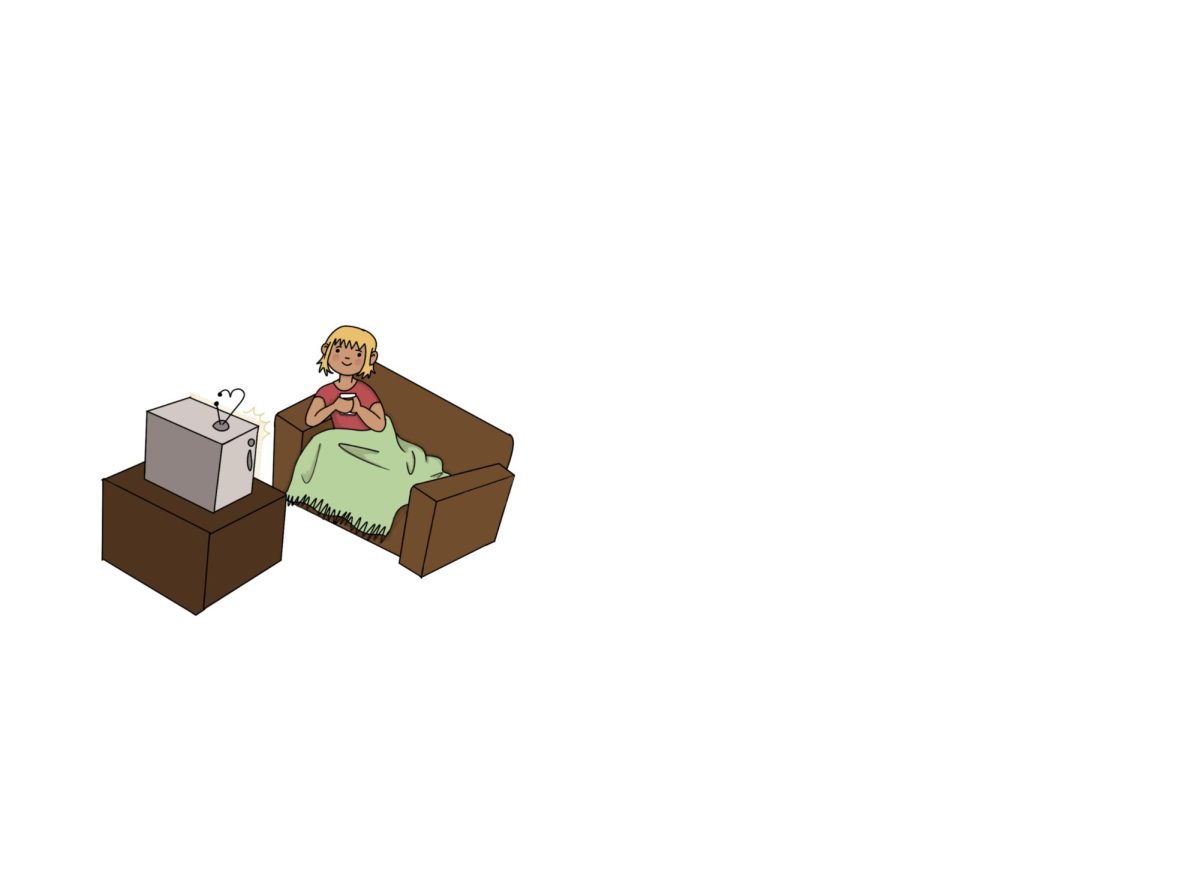
But I say give in, the stress of consumerism is right around the corner. Sometimes false hope is just what you need to get out of bed this winter season. Warm up some hot chocolate, build that snowman in your front yard, and cozy up in the corners of your couch. Holiday movies try to trick us each and every year, so maybe this December we can finally give in.