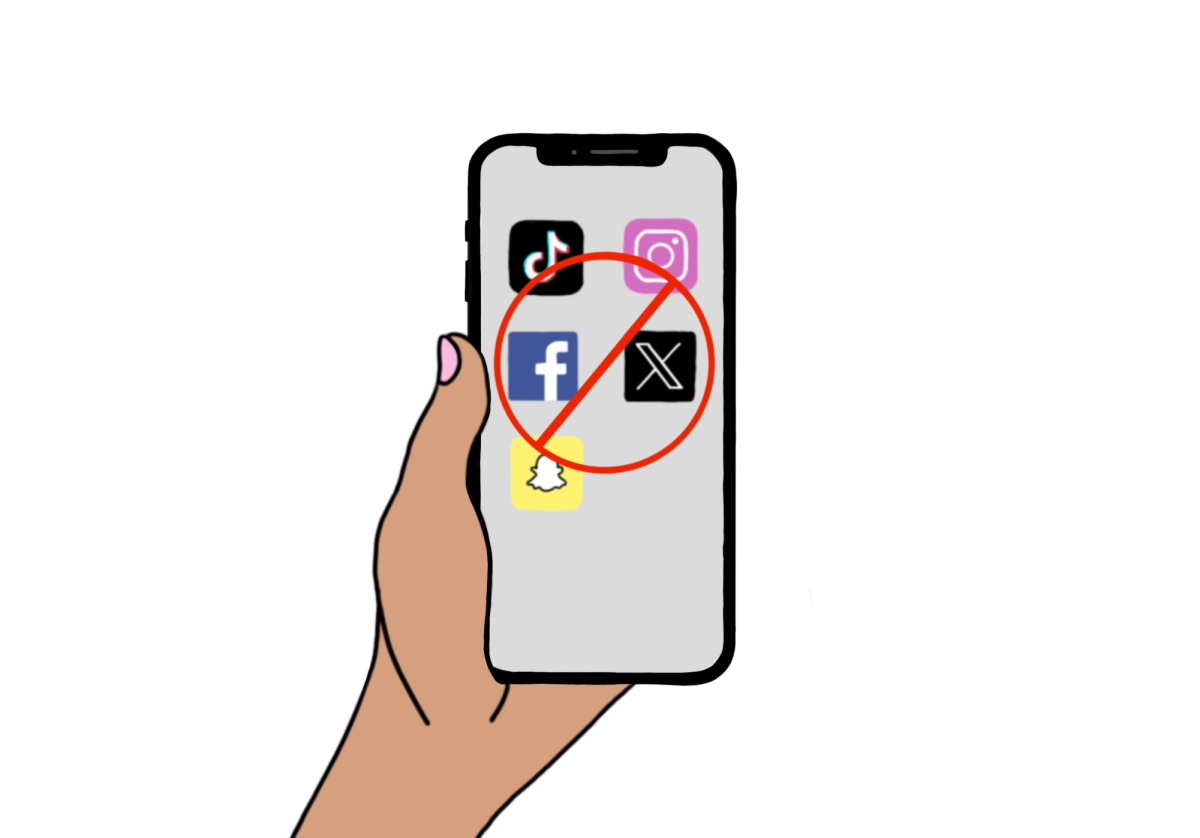
Most countries already have restrictions on the age at which citizens can drive, vote, and drink. In Australia, lawmakers have added social media to this list. Other countries should follow.
Current evidence suggests vast negative effects of social media, such as anxiety, depression, insomnia, and eating disorders. In fact, teens with the highest social media use rate their mental health almost two times worse than teens with the lowest use, according to the American Psychological Association.
Fear of missing out (FOMO) might be one of the reasons for this spike in teens’ declining mental health. After all, social media exacerbates FOMO. If a majority of people use social media, those who don’t can feel left out, and they might even miss out on in-person social opportunities. However, when teens throughout an entire country lack social media, they don’t have to worry as much about being left out.
Australia’s ban also stops youth from feeling roped into social media’s addictive algorithms, which are “designed solely to capture our attention for profit without prioritizing ethical concerns, personalizing content, and enhancing user engagement” (National Institute of Health). Young brains are especially susceptible to these addictive algorithms, according to the Clinical Psychology Institute.
Unfortunately, social media algorithms are working. Teens spend less time doing homework, going outside, playing sports, and having in-person interactions because they are scrolling on social media. In fact, according to the American Psychological Association, the average American teen spends 4.8 hours on social media daily, with TikTok, YouTube, and Instagram making up for 87 percent of that time.
Australia’s ban is sparking a trend: Britain, India, and France are already considering similar restrictions. If they follow through, youth everywhere could have the opportunity to engage in more stimulating, in-person experiences.
Critics of Australia’s law cite concerns about freedom of speech; the ban, they say, limits teens’ self-expression. These concerns are legitimate; social media sometimes helps youth find community and make an impact. However, the benefits don’t outweigh the profound risks. And teens have other ways to make their voices heard, such as writing, campaigning, and attending protests.
Australia’s government imposes a fine of 49.5 million AUD (32 million USD) on social media companies that don’t comply. So far, this has been effective at banning users under the age of 16. In January, for example, Meta already reported banning half a million teen accounts, and the country successfully closed loopholes commonly used to circumvent the ban, according to CNBC.
Engaged, healthy youth hold the key to a country’s future prosperity. By banning social media for kids under 16, Australia is protecting youth today and benefiting its future. The United States should follow, investing in its young people and in posterity.