Playing a sport is more than showing up to practices; it means you have to be completely committed in every aspect of your life. When I was just starting to play basketball, one of the very first things I was taught was how to handle the ball with my left hand as I do with my right. Every drill would require your left hand; every lay-up had to be with your left hand. If you wanted to go the extra mile, it meant you had to start eating with your left hand, turning on the sink with your left hand, and even writing with your left hand. If you weren’t just on the team to stay in shape, but rather playing to be at the highest level, then “Going the extra mile” was common among players. But being skilled and talented doesn’t make you “good” at sport.
To be good at a sport means you have to be good at life as well. I do not mean “have it all figured out”. I believe, no matter how old you are, no matter what experiences you have, life is not a game you can win. Playing a sport requires certain life skills that other things in life do not require of you. To be a teammate means more than picking them up when they fall. It means pushing them to keep going when they’re tired, holding them accountable even when they don’t want to hear it, and running an extra mile for them if you finish before them. It might sound easy on paper, but in real life, for the average human, it can be extremely hard. It’s more than being considerate or empathetic to another person, like you would when you see someone struggling with a math question and want to help. To put others before yourself while still being an individual player is not something you can get right every time. But sports ask that of you anyway. Having the same name on each other’s jerseys means more than “being on the same team,” it’s something greater, something you have to define on your own as you continue to go through life and athletics.
However, learning to be a pillar for your team is only half of what playing a sport means. You have to show up mentally before anything can fall into place. Your biggest opponent in a game will always be you. This is why athletes often have tunnel vision not only during their season but off-season as well. When an athlete tells you, “I have to focus on basketball,” or whatever sport they play, it means more than focusing on their game. It’s “how can I show up differently on the bench?” “How can I improve the way I talk to myself after a mistake?” “What does being a leader look like for me?” These are the questions that sports provoke in every athlete who is serious about what they do. Yet another great reason why playing a sport is extremely valuable and important.
Given this, it’s common for athletes to surround their entire life with what they play. Being a student athlete is primarily perceived as a full-time job. Practice and homework are every day, and your free time consists mostly of eating healthy, physical therapy, and/or film. This routine and strict discipline often takes players to the highest level, but this drive and passion that it requires easily tunes out anything else the world has to offer. You see, being an athlete isn’t your entire identity, and that’s something that I’ve recently learned.
I’ve been around basketball my entire life. The very first influence basketball had on my life was when I was just 9 months old. I moved to New Zealand because my father was a professional basketball player who played on and off-season. Being around that at a very young age, the definition of a team and a family fused as one. So when I joined my first basketball team at the age of 8, I might not have had the skill, but I had the passion. As I grew up, I fell in love with basketball because of what it represents for me.
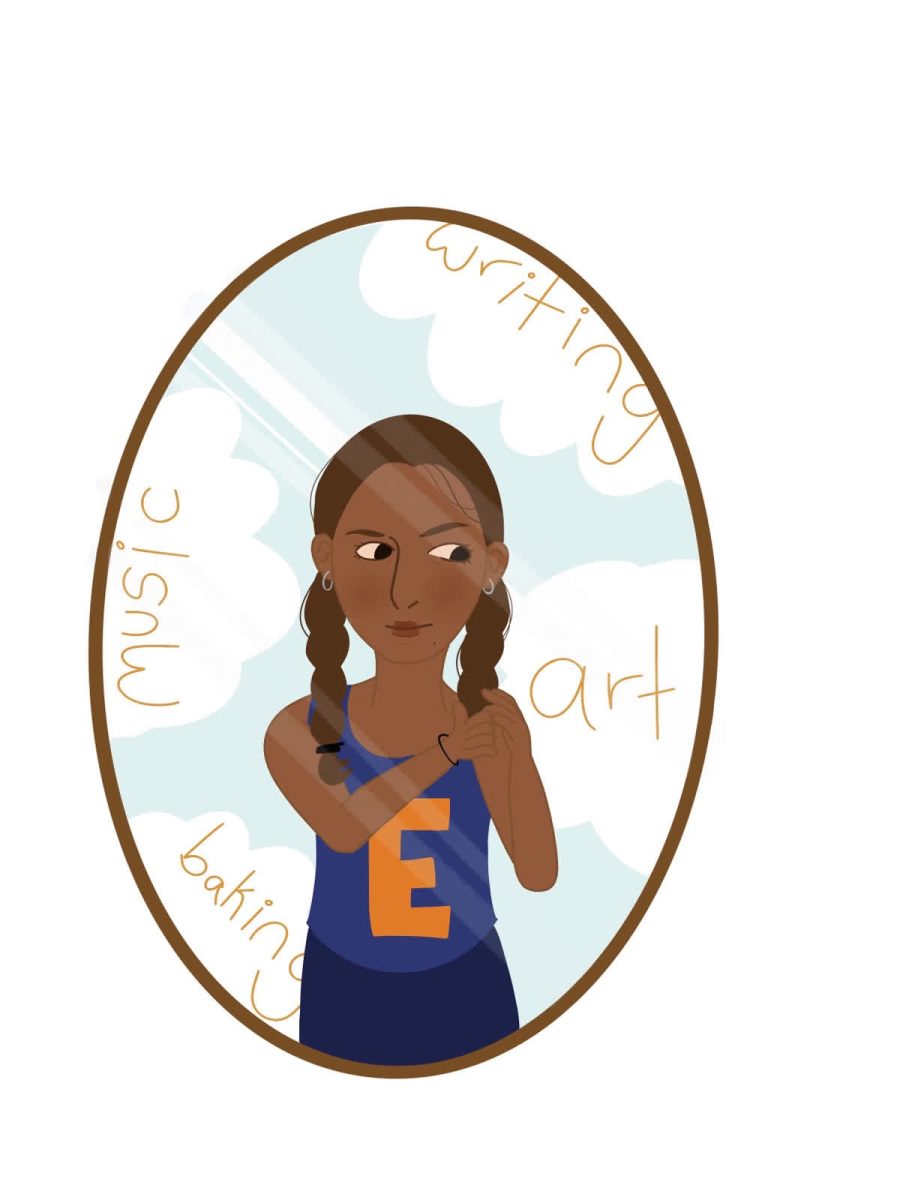
The summer going into my Junior year, I spent a month living in Madrid, Spain, to take classes about language and culture. That summer, I published 2 short films and started a novel within a month. As much praise as I got for these accomplishments, this was the first time in my life that I started thinking about basketball differently. Basketball was the only thing that I knew surely made me happy. Yet putting pen to paper made me even happier. I had never asked myself what else I liked to do other than basketball, and I assumed I was nothing other than a basketball player. But writing showed me otherwise. It made me move differently as well. Basketball became something completely different for me, and I was scared of it. I was coming up on my 10th year playing, but it became something I did because I’ve always done it, rather than something I do because I love to do it. This debate inside my head started to fester into my physical abilities and the mental perseverance sports require every day. I was born into basketball, and somehow, I was starting to grow out of it. This resulted in mental burnout.
Trine University Center for Sports Studies reports that roughly 35% of elite athletes and 44% of student athletes struggle with depression, anxiety, and burnout. Some studies show that up to 51.7% of all athletes experience these issues at some point in their careers.
Every athlete’s story is different when it comes to their relationship with their sport. But it’s true everywhere that athletics are one of the many things that has an expiration date. You can’t run up and down a court, field, or mat forever. It’s important to internalize that now, because when that day comes when you can’t run from retirement anymore, people are going to look at you and ask what else you’re good at. And it’s a whole other ball game if you respond with “I don’t know.” I’m not done with sports, and neither should the athlete reading this article who feels the same way. But allow yourself to think about what else you’re good at or want to be good at. Just like sports, life was never meant to be played in only one position.