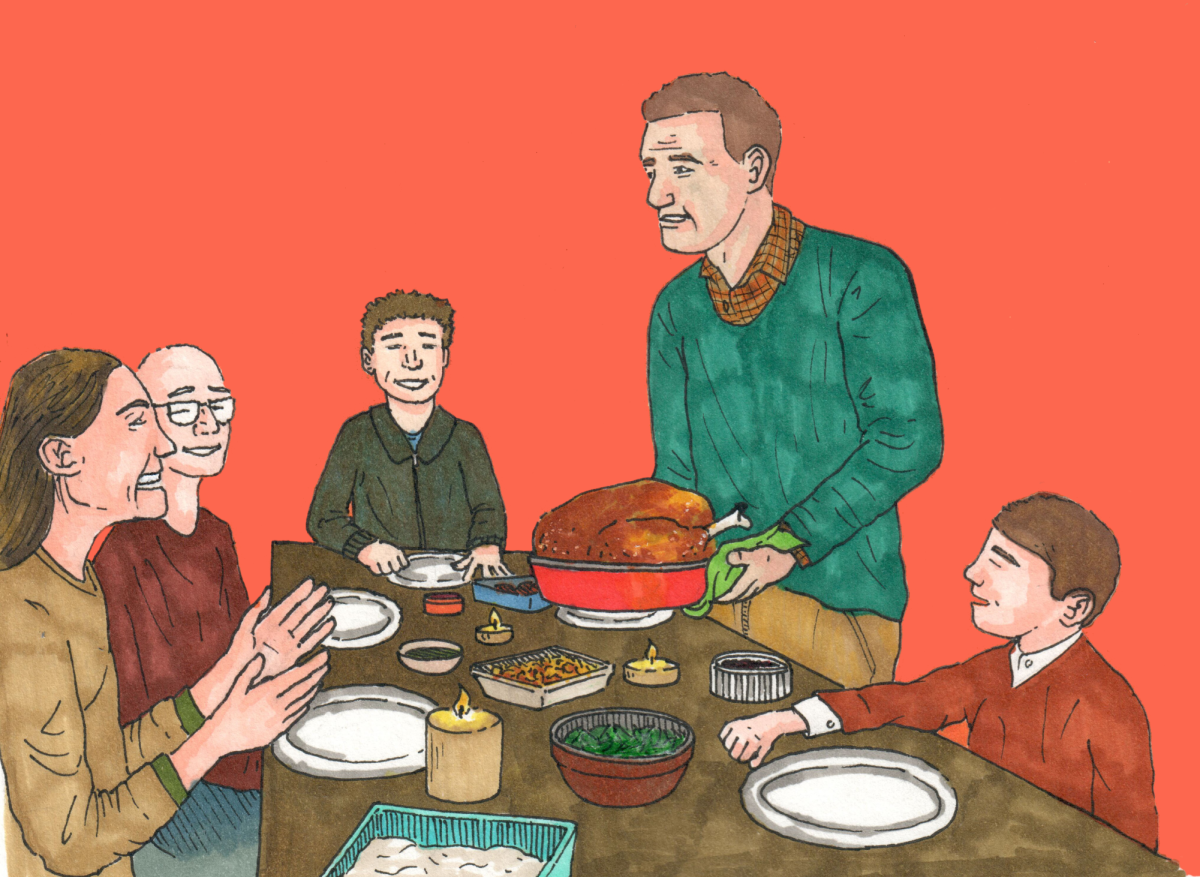
Fall Break is right around the corner, meaning Thanksgiving is on the horizon. Every holiday season seems to have its own theme: October is scary, December is festive, but November always circles back to one thing – being “thankful”. Every November, gratitude seems to become trendy again. Social media is filled with big feasts, smiling families, and the caption “I’m so blessed.” Teachers at school give you pieces of paper with a starter sentence of “I’m grateful for you because…” Then, suddenly, gratitude becomes an assignment. But we need to realise we’re just going through the motions. For a few weeks every year, the words “I’m thankful for you” become redundant. Instead of saying it with meaning, we say it because those are the “rules” of November. Data from Vox Pop Science’s, “Are We More Thankful On Thanksgiving?” article shows 12% more people choose “Very Much” on the Thankfulness scale on Thanksgiving than any other day of the year.
And that’s the problem. Thankfulness has become something we say –not something we feel. It’s easy to say “I’m thankful” when everyone else is saying it too. It’s even easier to fit in a little caption under a post that can’t actually describe the gratitude you feel for the person next to you. November shouldn’t just be about whether your social media profile is aesthetic enough; it should be about showing appreciation for the people who make you smile. It’s not hard to feel thankful, but it can be hard to express – especially if you don’t know how. So, it can be as small as giving your apple to a friend if they didn’t bring lunch, or taking a few minutes to ask your teacher about their day. It’s the actions you can’t fully see in a simple picture that mean the most at the end of the day. If we’d just stop trying to prove our gratitude and start showing it, Thanksgiving could take on a deeper meaning.
We’re told by adults to “be grateful for what you have”, yet no one talks about how difficult that can be when life feels overwhelming. November has become wanting to say the right thing, rather than actually feeling it. But it’s important to recognize that gratitude can start to feel like a performance— because it’s a way to seem positive even when you’re struggling inside. Of course, it’s hard to show appreciation to others when you don’t fully appreciate yourself. But maybe that’s where real thankfulness begins: not in pretending everything’s okay, but in recognising that it isn’t always okay. November shouldn’t just be a time to spread gratitude to the people in your life, but also to the person you see in the mirror every day.
Gratitude isn’t expected to be perfect or polished. It’s not about how pretty your Thanksgiving post looks or how long your speech at the table is. It’s about being honest–and meaning what you say, even if it’s messy or small. So this November, instead of trying to prove that you’re thankful, feel it. Whether it’s quiet or imperfect, that kind of gratitude lasts longer than any caption ever could.