A team captain is often thought to be the face of the team. They are the leading force, representing a winning group of players. However, team captains are not always the biggest goal scorers, fanciest dribblers, or social media darlings. More often than not, team captains are the heart–not the face–of their team.
“It’s those guys that bring people together. They’re the glue of the team, probably one of the hardest workers on the team. It doesn’t hurt to have great talent, that would be a plus. But really, it’s not the best player, it’s the best character,” said varsity soccer head coach Franz Calixte.
Team captains have different jobs in all sorts of different sports, but one thing that stays consistent is their leadership. Being a team captain usually just means being a rolemodel–not for skill, but for character.
At least that is how it is supposed to be at the high school level.
“You know, people like Cristiano Ronaldo would be a captain. He’s not a captain. He’s the best scorer, but he’s not a captain like mentality,” adds Calixte.
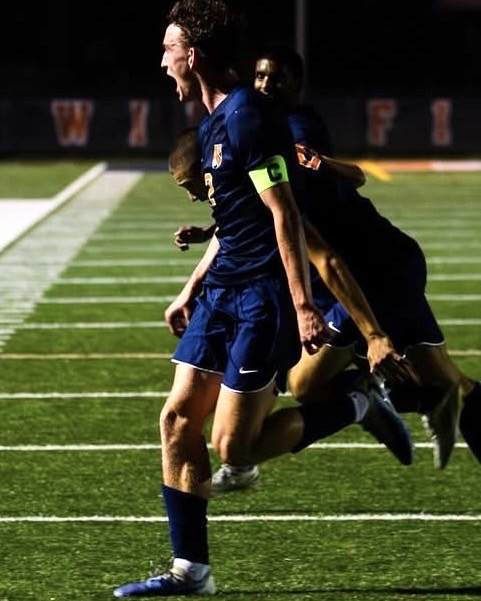
From a more technical standpoint, team captains also talk with the refs, they call the coinflip, or they rearrange their neon armbands. But in the grand scheme of things, that is not what it means to be a captain.
Another job that a team captain has is connecting the coaches to the players.
“I think it’s kind of the bridge between the coaches and the players. You know, it’s an extension of the players going with the coaches, but it’s also an extension of the coaches going down to the players.”
This is just what a captain is from a soccer coach’s perspective, though; the term “team captain” can be applied in various ways in different sports.
Sometimes the position of team captain is entirely honorary. Out of the thirty Major League Baseball teams, only a handful have designated captains, and even the officiality of these designations is controversial.
In many sports, for example, football, having one captain is difficult and even confusing. This is because of the different offensive, defensive, and special teams units that all compete at different times of the game.
Now, someone reading this might easily assume that being a team captain is awesome. Recognition, respect, and honor from teammates and coaches alike. That is an athlete’s dream!
However, with privilege comes responsibility.
“Well, you don’t have a day off! I mean, you’re the one who has to be the most consistent,” explains Calixte. “You’re always on. If you’re a captain, you have to put the team above you all the time.”
For a young player aspiring to be a varsity captain one day, though, in whatever sport, that cannot become intimidating. “You don’t just wake up one day, and then you are the best leader for a team,” remarked Calixte.
Leadership is something that can be developed. For that reason, ETHS has programs and workshops year-round that help build leadership skills in young students. Leadership can even extend beyond high school sports, into people’s everyday lives.
Although invisible, that neon captain’s armband an athlete earns in junior or senior year of high school stays on years after they have stopped wearing their bright orange Wildkit’s uniform.