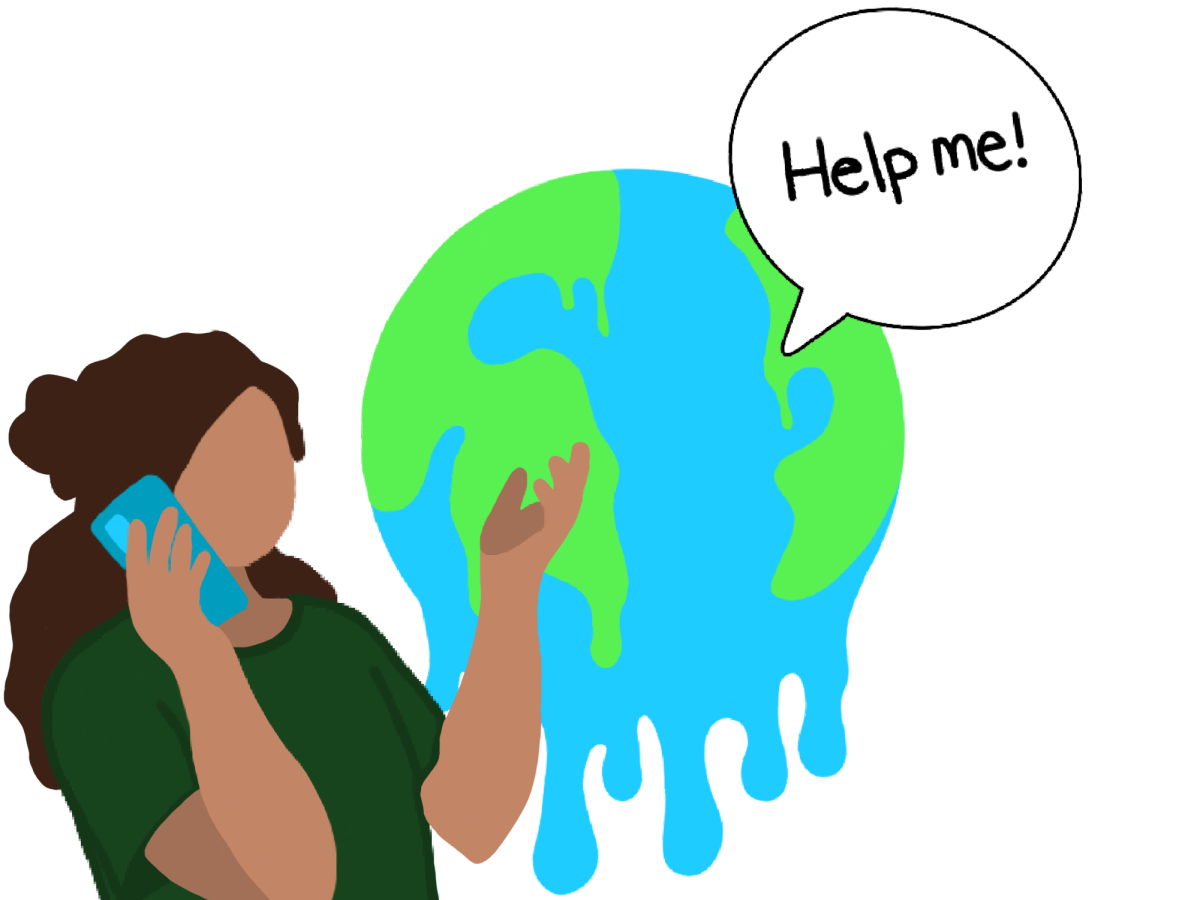
For many ETHS students, the return to school from our 11-week summer hiatus came all too soon. The hours spent along the shores of Lake Michigan or vacations to destinations across the globe were welcome reprieves from the studying and stress of the school year. Yet a small part of me has not been sad to watch summer melt into autumn. Liberating and relaxing though June and July were, they also brought oppressive heat and erratic weather that made basking in the summer sun nearly as insufferable as having a wintertime picnic atop a snowbank.
From scorching temperatures and sky-high humidity rates to vicious thunderstorms that rattled windows, stranded vacationers, and single-handedly sent the stocks of the umbrella industry soaring, the climate-controlled indoors became increasingly enticing as summer progressed.
While we may be able to control the climate of our homes, shops, and schools, we have not been able to do the same with our actual climate. My comments about this past summer are not merely melodramatic complaints about the innate nature of a season that is, by definition, the warmest of the year. The fact of the matter is that 2024 was the warmest year on record since we began collecting temperature data in 1850, with Earth’s average surface temperature having increased by two degrees since then. This change may seem small; however, NASA considers it a “critical threshold above which dangerous and cascading effects […] will occur.” The overwhelming scientific consensus for this sharp temperature rise is, of course, climate change.
To some, that previous sentence may have seemed exasperatingly self-evident. We’ve been hearing about climate change for as long as there has been a climate to change. We are all acutely aware of the consequences that this self-inflicted catastrophe is wreaking on our planet. Naturally, given our cognizance of this issue, we have all done everything in our power to minimize our personal contributions to the problem. But have we?
How often do we actually avoid using plastic – be it not ordering takeout, curbing our online shopping habits, or refraining from buying a plastic-coated snack from a vending machine? Do we painstakingly sift through our trash to ensure that every last ounce of recyclable material is disposed of properly? Have we fully equipped our homes with LED light bulbs and solar panels? In the U.S., more people than ever before are flying and driving, yet are we all ditching our cars and planes in droves in favor of cycling, walking, and public transportation?
This is an argument frequently presented by far too many people and organizations, and I have repeated it to emphasize its absurdity and iniquity. Eco-friendly products can be upwards of 50 percent more expensive, which simply isn’t an option for many working-class individuals. Public transportation, walking and cycling aren’t always viable means of transportation, especially in North America, forcing many people to own a car and drive instead. Sorting trash from recycling often proves to be a time-consuming and grueling process that is often undermined by cities that proceed to dump recycling in the landfill anyway. The consumer is never responsible for how a supplier chooses to ship and package their products; the other day, I received an Amazon package the size of a textbook for an item the size of a matchbox. To put it bluntly, it is grossly unfair to blame the average person for climate change.
While it may be true that many of our lifestyles negatively contribute to climate change, this is not because we are intentionally trying to harm our planet. Rather, we are products of the environment that we are within. Cynical and pessimistic though it may seem, participation in contemporary American society requires a carbon footprint. Do you want to be carbon neutral? Well, I suggest moving into a treehouse, preferably somewhere wholly detached from civilization, because, in 2025, being 100 percent climate neutral in the United States is a Sisyphean endeavor.
Yet this isn’t the trade-off for living in a developed, complex society. The true burden of climate change lies with Fortune 500 companies, the fossil fuel industry, and corrupt politicians who are incentivized to support the aforesaid parties for financial gains, or else because they are ex-Big Oil executives. For almost four decades, just 100 companies have been responsible for 77 percent of greenhouse gas emissions. Exxon, BP, and Shell alone are responsible for 10 percent of carbon emissions.
While these companies often issue faux sustainability pledges, these promises are almost always empty words fabricated for PR purposes. A company with an infamous proclivity to greenwash is BP, which was responsible for the largest oil spill in history, a negligent disaster that continues to impact coastal ecosystems in the Gulf of Mexico 15 years later. Despite the usage of words such as “low carbon” and “transition,” remarkably little has been done by BP to actually support the environment. An ambitious 2020 plan by the company to execute a 40 percent cut in gas and oil production by 2030 was subsequently truncated to a 25 percent reduction in 2023 before being canceled in its entirety earlier this year.
Most corporations could easily switch to more eco-friendly products and materials, yet they continue to stubbornly proceed with plastic, styrofoam, nylon, and polyester, among other environmentally detrimental materials. As per usual with a laissez-faire capitalism economy, money always eclipses ethics and business executives are focused exclusively upon looking after their wallets instead of the environment. Most companies won’t embrace a sustainable operating practice unless it is profitable. Unfortunately, this approach is working swimmingly for the ultra-rich and their companies. In 2024, the cumulative revenue of the Fortune 500 companies was almost $20 trillion. To put that into perspective, 20 trillion seconds is approximately 634,000 years, which means that 20 seconds ago, Humans did not yet exist (Homo Sapiens only began appearing on the African continent approximately 300,000 years ago).
With all of this being said, our lifestyles do have an immense impact on the welfare of our planet, even if the Fortune 500 companies ultimately control vast parts of how we can live. In a perfect world, these parties would take the initiative to solve the problem they created. However, expecting this reality to come to fruition anytime in the near future would be idealistic to the point of foolishness. In the meantime, we – the consumers – can’t just shrug our shoulders and ignore the crisis that is climate change. We must take some initiative to modify small aspects of our lifestyles where feasible, while reminding ourselves that this problem is not our fault, nor does its resolution fall solely upon our shoulders.