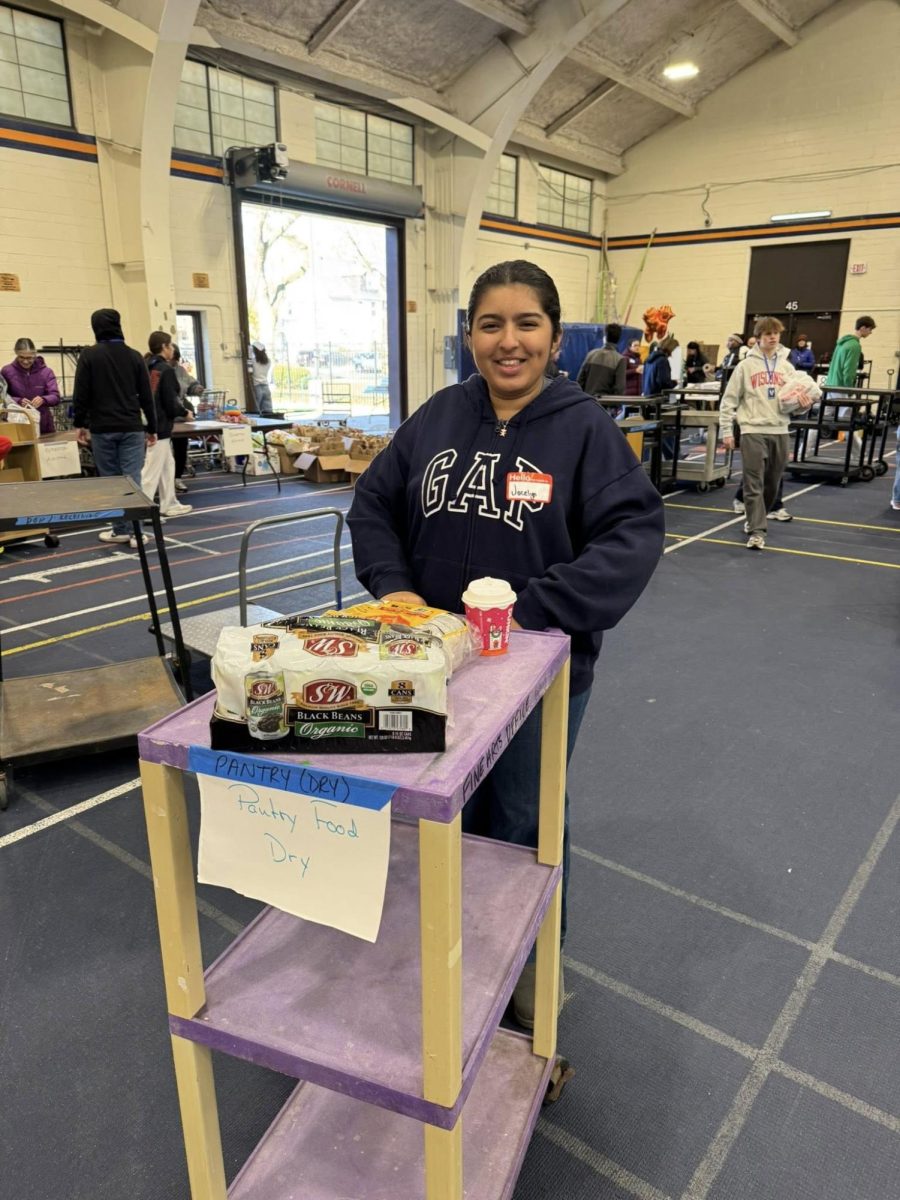
In Evanston, there are many ways students can get involved with their community. Organizations like Connections for the Homeless or Evanston Schoolchildren’s Clothing Association (ESCCA) provide meaningful opportunities for students to actively help their city thrive. At ETHS, there is a significant push to get students involved with this community service as early as possible. Between the volunteer fair at the beginning of the year, where students are introduced to different organizations, and the Community Service Club’s year-round events, students have a multitude of chances to help out. However, outside of the drive to serve one’s community and inflict meaningful change, there is another major contributor to student involvement in community service: the Honor Society.
Both the National Honor Society and the Freshman/Sophomore Honor Society have community service requirements for students looking to be accepted. For juniors and seniors, this is 15 hours of service, with a deadline around early April. Freshmen must complete five hours, and sophomores must complete 10 hours, with both grades having two deadlines each in December and early April.
For students aiming to be a part of an Honor Society, this community service is mandatory, and each year, a significant number of volunteers come from applicants hoping to fill the requirement. However, this service can often get pushed off until the last minute, leading to shifts in available volunteers and challenges for organizations that count on students to help out.
To Erin Claeys, the ETHS Community Service Office coordinator and a co-sponsor of the club, it is clear that there are specific times of year when volunteering help is more needed than others – this does not necessarily match up with when students are cramming in service.
“For both National Honor Society and Freshman and Sophomore Honor Societies, as soon as those letters go out, we suddenly have a ton of kids who are really interested in doing service,” remarked Claeys.
In an effort to stop the end-of-year volunteer hours cram, the Community Service Club pitched two different deadlines for Freshman and Sophomore Honor Societies to the Honor Society sponsors, one at the end of the first semester and the other on April 10th, the end of the school year. The Honor Societies implemented the decision, and it has been running its course for the first time this year.
It is not just the Community Service Club, however, that notices the scramble for service before deadlines. The difference in volunteers is also visible at Canal Shores, a local group that focuses on the ecological restoration of the North Shore channel, bringing in many student volunteers each year to aid its mission.
“We definitely, around the end of the year, see a lot more students coming to volunteer,” stated Megan Hart, ecology coordinator for Canal Shores. “We try to make sure that we have enough volunteer leaders and experienced volunteers to guide the newer people, because we have a rotating volunteer base when some of these students are needing hours and then leaving.”
The Honor Society requirement, and the influx of volunteering it creates, brings into question what the goal of community service is, or what it should be, when students doing service because of the Honor Society often do what they must to fulfill their hours and then quit. Do the Honor Society requirements actually inspire the motivation for ongoing service in students, or do they make service seem like another task to check off a list?
For many organizations, the most appreciated help from volunteers is continuous and year-round – the antithesis of “fulfilling a requirement.” Naomi Satut, a senior and Community Service Club board member, agrees. “I believe that the requirements, while they encourage students to volunteer, can discourage them from being a part of long-lasting service opportunities,” she said. “When community service is being thought of as a quota, or reaching a requirement of a number of hours, less meaningful contributions are seen.”
Community service can be mutually beneficial, and boiling it down to another requirement for Honor Society can neglect the many ways that volunteers gain from the service they do.
“Community service can help high schoolers develop an emotional and social awareness of what’s going on in their broader community. It helps people realize that there are changes you can make right now,” noted Claeys. “The second piece is skill building, life preparedness, and executive functioning, really helpful, tangible, stuff.”
An important aspect of service that can get lost on students through the Honor Society requirements is finding something they are passionate about. The Community Service Club hosts multiple events each month, with bigger, one-time events such as Empty Bowl or gift drives. Their six different committees focus on different aspects of community outreach, giving volunteers specific types of ongoing service to funnel their passions towards. Canal Shores offers opportunities to work with nature maintenance and restoration, connecting with fellow volunteers along the way. Through these different service opportunities, there is most likely something for everyone to connect with, and connecting to the service one does can make it more impactful for them, and their community.
For one junior, her entire journey with service started with a specific intention. “I recall as a freshman walking into Erin’s office and wanting to assist immigrant and minority communities. As a Mexican woman myself, I saw injustices such as ICE entering Evanston and bringing uncertainty to my community,” stated Sofia Oliveros, Food Access Board member for the Community Service Club. “The reason why I decided to become a Food Access leader and later the Board member, was to connect to others using the Spanish language and provide basic necessities to them. I hope that others see the value and impact intentional service could bring to our Evanston community.”