This year, the class of 2026 has much to look forward to. Athletics, prom, and preparing for the even bigger leap into college are all things to be excited about, but with that comes a great deal of stress and decision-making.
Stress arises frequently for busy seniors who participate in sports. Academically, they must maintain certain grades to play.. This can strongly affect a senior’s social life, as balancing practice and study time becomes time-consuming. “From cheerleading to homework, my time is filled up, which leads me to find less time to hang out with people, or do things that I enjoy,” says Kierstin Jamison, a senior varsity cheerleader.
A crucial for seniors, who now consider forming new bonds and participating in activities as much as they can before starting over in a new community. For seniors enrolled in AP classes, having a more condensed social life is par for the course. Recently, some AP classes have changed their curriculum, making it difficult for students and teachers to adjust fully. “This year, I’m taking AP Statistics, AP Lit & Comp, and AP African American Studies,” states ETHS senior Leyanna Ciego. “From my first week of school, I have had assignments stacked up from each of these classes, leading me to try to divide them evenly with my other homework assignments.”
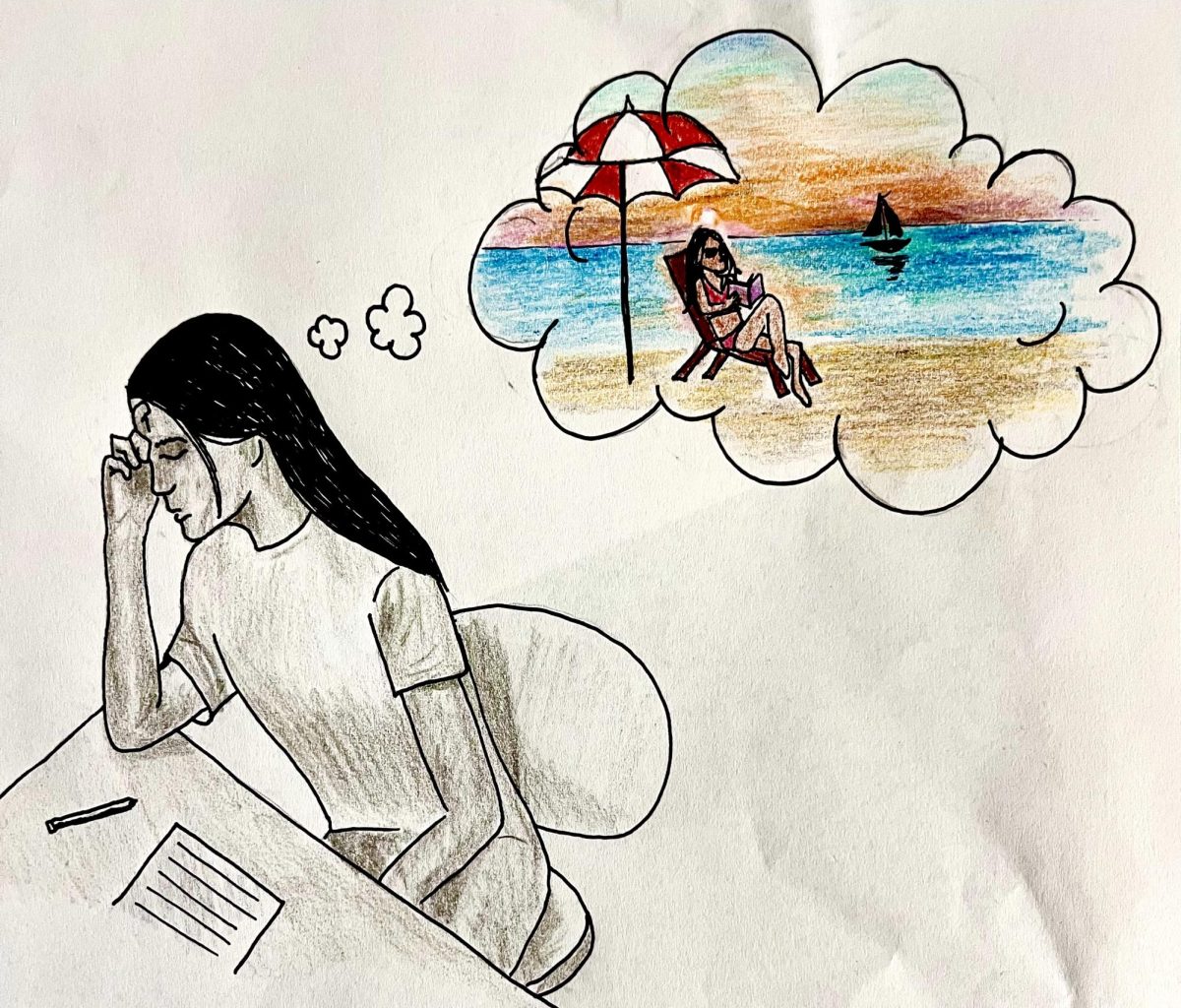
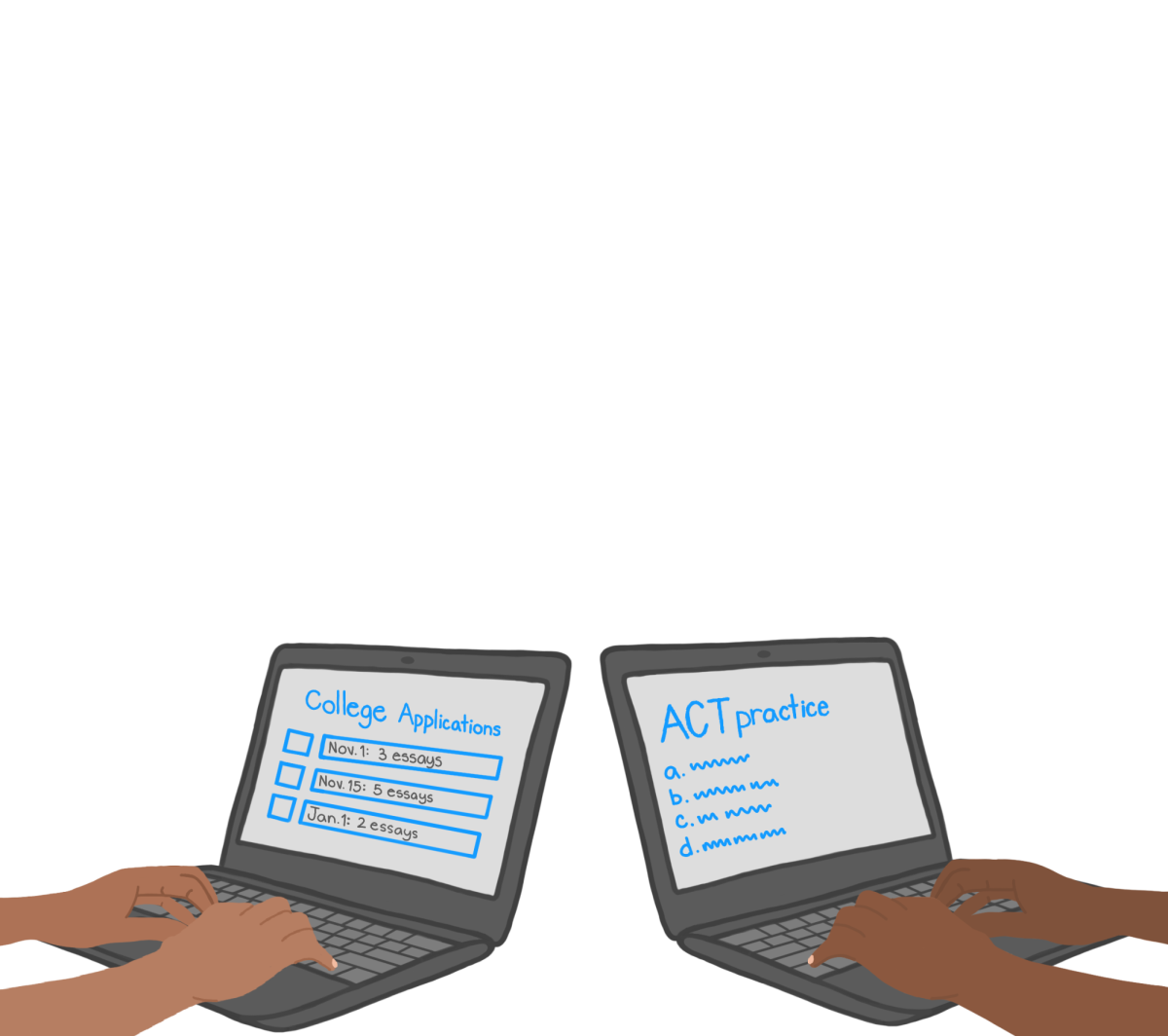
As a result of the academic stress at the beginning of senior year, students’ mental health can undergo drastic changes. Throughout the year, but most notably towards the end, seniors’ motivation seems to cease. The lack of motivation in seniors is informally, and famously, known as “senioritis.”–a feeling of increased burnout that often occurs during the final year of high school. “I’ve been less motivated because of stress,” notes senior Iris Lear, “I think that it is hard dealing with the balance of school assignments and the Common App.” Lear refers to the standardized college application that many seniors work tirelessly to fill out for each school they apply to. However, the burnout they face impacts their ability to focus on their studies as well as their future college career. College is an exciting experience that seniors should look forward to, but with the overwhelming pressure of tests, homework, sports, and clubs, the act of applying to college can be very draining.
The first quarter of senior year can be an especially hard adjustment, coming off junior year, one of the hardest years. Some may disagree and say that senior year is the hardest, but both junior and senior years have unique academic difficulties. Junior year comes with many significant tests and, for many, more challenging classes. The ACT or SAT tests and AP tests are important things that juniors study for the majority of their school year. Seniors are typically more focused on their college applications and managing to stay on top of their classes. “For many students, senior year is ‘go time’ — things go from ‘getting real’ to ‘just got real,” said Dan Gill, a licensed psychotherapist who works with teens and young adults. “The Common App and supplemental essays ask seniors to present and ‘define’ themselves to the broader world as they wrestle internally with self-concept.”
As work continues, stress also persists, but there are many ways to control and manage both stress and mental health. Start by focusing on one thing at a time. Making a schedule, managing work, and getting it done on time can seem less daunting. Talking to teachers and making sure they know about how you are feeling when it comes to the workload, and if it has been affecting you mentally, is the best remedy for senioritis.